
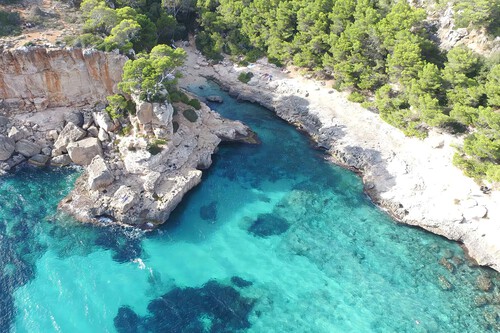
Palma’s finest coves—including Cala Blava, Portals Vells, and Caló des Moro—offer premier superyacht anchorages with turquoise waters and limestone protection. Accessing these secluded calas requires careful attention to Posidonia oceanica preservation rules and tender-only depth limitations.
Navigating the Bay of Palma: A Masterclass in Quiet Luxury
The Bay of Palma offers some of the Mediterranean’s most sought-after coastline. For discerning yacht owners and charterers, the real luxury lies just beyond the bustling marinas of Club de Mar and Puerto Portals: sheltered calas carved into dramatic limestone cliffs, accessible only by water.
Navigating these waters requires balancing luxury with marine stewardship. The Balearic Government enforces strict conservation measures to protect endemic Posidonia oceanica seagrass beds. Dropping anchor in Posidonia is strictly prohibited and monitored by marine patrols. Utilizing sand pockets, mooring buoys, or dynamic positioning systems ensures your vessel complies with local regulations while maintaining pristine conditions.
Curated Dossier: Palma’s Finest Anchorages
Caló des Moro Anchorage Zone. Source: Pedro Merino Higueras / Getty Images
Cala Pi Inlet & Cliffs. Source: Francisco Antonio Palomo Nepomuceno / Getty Images
1. Cala Blava & Cap Rocat
Located on the eastern curve of Palma Bay, Cala Blava sits directly below the iconic military fortress converted into the ultra-exclusive Cap Rocat hotel.
- Best Suited For: Mid-size luxury yachts and superyacht tenders.
- Seabed & Holding: Sand and fine gravel pockets; excellent holding in 6–12 meters.
- Protection: Exceptional shelter from easterly and southerly winds; vulnerable to strong westerly swells.
- The Experience: Anchor offshore for complete privacy, then take the tender to the cliffside restaurant at Cap Rocat for an unhurried sea-to-table lunch.
2. Portals Vells (El Mago)
Positioned on the south-western edge of the bay, Portals Vells consists of three distinct coves surrounded by deep pine forests and ancient stone quarries.
- Best Suited For: Large motor yachts (20m–45m LOA) anchoring further out, with deep-draft tenders entering the inner bay.
- Seabed & Holding: Sand beds mixed with shallow rock shelves.
- Protection: Sheltered from north and west winds; exposed to southeast swells.
- The Experience: Famous for its tranquil morning waters, perfect for paddleboarding, seabobs, and private onboard dining before afternoon boats arrive.
Technical Specifications for Palma Anchorage
| Cove | Max Recommended LOA | Average Depth | Primary Seabed Type | Tender Access |
| Cala Blava | 35m | 6m – 14m | Fine Sand & Rock | Yes (Private dock nearby) |
| Portals Vells | 45m+ (outer bay) | 5m – 12m | Sand / Posidonia boundaries | Yes (Beach landing) |
| Caló des Moro | Tender Only | 3m – 8m | White Sand | Tender / Jet Ski |
Frequently Asked Questions
What are the anchoring restrictions for superyachts in Palma de Mallorca?
Vessels over 24 meters LOA must adhere strictly to Balearic marine reserve regulations. Anchoring in Posidonia seagrass is strictly forbidden across Mallorca. Yachts must anchor in designated sand zones or utilize official mooring buoys where available.
Which coves near Palma offer the best protection from southwest winds?
Cala Blava and the coastline extending down toward Cap Enderrocat offer effective natural shelter from westerly and southwesterly breezes due to high limestone cliffs.
Can luxury yachts land tenders directly at beach clubs in Palma coves?
While several coves have small jetties or beach access points, many private establishments require prior notification or offer designated tender drop-off service channels marked by yellow buoys during peak summer months.